Natural Rubber vs Synthetic Options for Pulp and Paper Applications
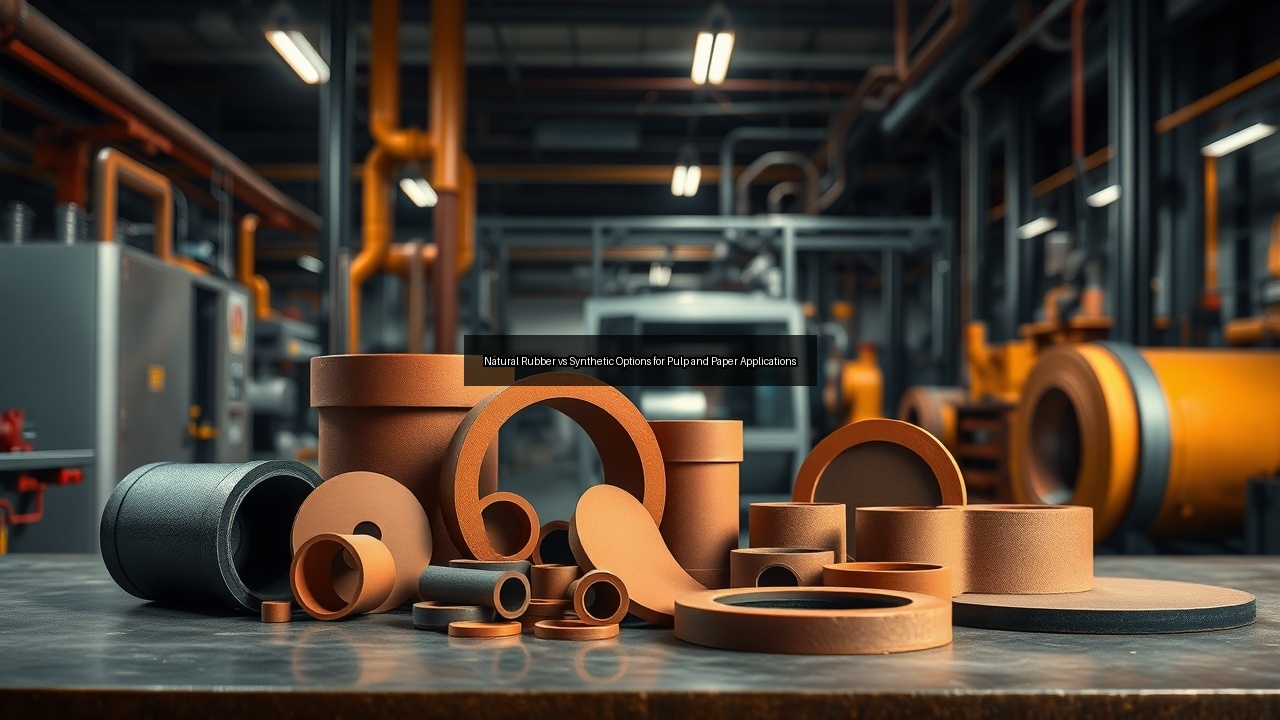
Introduction to Rubber in the Pulp and Paper Industry
Overview of the Pulp and Paper Industry
The pulp and paper industry plays a crucial role in the global economy, producing essential products ranging from packaging materials to writing paper. This sector relies heavily on various materials and technologies to ensure efficient production and high-quality outputs. In this landscape, rubber products for the pulp & paper industry have emerged as indispensable components, facilitating processes that require durability, flexibility, and resistance to wear. Understanding the materials used, particularly in sealing and fitting applications, can provide insight into the industry's operational efficiency and product integrity.
Importance of Rubber Products
Rubber products serve vital functions in the pulp and paper sector, particularly in machinery and equipment used during the production process. They enhance operational efficiency by sealing critical components, absorbing vibrations, and providing shock resistance. Stoppers and gaskets made from rubber prevent leakage and maintain pressure in various systems, ensuring smooth operations. The reliability of these rubber products contributes significantly to minimizing downtime and maintenance costs, which ultimately leads to increased productivity and profitability in the industry.
Types of Rubber Used in the Industry
Both natural and synthetic rubber types find applications in the pulp and paper industry. Natural rubber, derived from the sap of rubber trees, offers exceptional elasticity and tensile strength. Synthetic options, such as ethylene propylene diene monomer rubber (EPDM), provide versatility and performance in various environmental conditions. The choice between these rubber types depends on specific application requirements, including exposure to chemicals, temperature fluctuations, and mechanical stresses. Understanding the characteristics of each type helps manufacturers select the most suitable rubber products for their unique needs.
Natural Rubber: Advantages and Applications
Properties of Natural Rubber
Natural rubber boasts impressive properties that make it an excellent choice for many applications in the pulp and paper industry. Its high elasticity allows for considerable deformation under stress, which is crucial for components that experience dynamic loads. Additionally, natural rubber exhibits remarkable tensile strength, enabling it to withstand significant wear and tear. Its excellent resilience also ensures that rubber products made from natural rubber return to their original shape after deformation. This combination of features makes natural rubber particularly valuable for stoppers and gaskets, where a tight seal and durability are essential.
Common Uses in Pulp and Paper
In the pulp and paper industry, natural rubber finds numerous applications due to its unique properties. It is commonly used in making stoppers that seal valves and tanks, preventing leaks and maintaining pressure. Gaskets made from natural rubber are crucial in various machinery, ensuring tight seals to protect against moisture and contaminants. Furthermore, natural rubber components often feature in conveyor belts and rollers, where flexibility and grip are essential for smooth material handling. These applications highlight the material's ability to enhance operational efficiency, minimize downtime, and maintain the quality of paper products.
Natural Rubber Stoppers and Gaskets
Natural rubber stoppers and gaskets play a critical role in the pulp and paper industry's machinery. These components must withstand exposure to various chemicals and temperatures without compromising their integrity. Natural rubber exhibits excellent resistance to water, making it ideal for use in environments where moisture is a concern. Moreover, its ability to maintain a tight seal ensures that processes run efficiently and safely. The longevity and reliability of natural rubber stoppers and gaskets contribute to reduced maintenance costs and increased productivity, making them a favored choice in many applications within the industry.
Synthetic Rubber: Versatility and Performance
Overview of Synthetic Rubber Types
Synthetic rubber encompasses a variety of materials designed to mimic or enhance the properties of natural rubber. Among these, ethylene propylene diene rubber products for pulp industry monomer rubber (EPDM) stands out for its exceptional performance in harsh conditions. EPDM rubber exhibits outstanding resistance to heat, ozone, and various chemicals, making it suitable for a wide range of applications in the pulp and paper industry. Other synthetic rubber types may offer unique properties tailored for specific uses, such as high-temperature resistance or enhanced flexibility. The adaptability of synthetic options allows manufacturers to select materials that meet exacting standards in their operations.
EPDM in Pulp and Paper Applications
EPDM rubber has gained popularity in the pulp and paper industry for its impressive performance characteristics. It excels in environments where exposure to chemicals is inevitable, providing a reliable barrier against corrosive substances that can damage equipment. Its excellent weathering properties also make it suitable for outdoor applications, where temperature fluctuations and UV exposure can affect material integrity. Additionally, EPDM's flexibility and resilience allow for effective sealing in machinery, reducing the risk of leaks and enhancing overall operational efficiency. As such, EPDM rubber products are increasingly favored for various applications within the industry.
Benefits of Synthetic Options Over Natural Rubber
Synthetic rubber options, particularly EPDM, offer several advantages over natural rubber in specific applications within the pulp and paper industry. One significant benefit is chemical resistance; synthetic rubbers can withstand exposure to a broader range of substances without degrading. This resistance extends the lifespan of rubber products, leading to lower replacement costs and reduced downtime. Furthermore, synthetic rubbers often maintain their properties across a wider temperature range, ensuring consistent performance in varying conditions. These features make synthetic rubber products a more versatile and reliable choice, especially in demanding environments.
Comparative Analysis: Natural vs Synthetic Rubber
Cost Considerations
Cost plays a pivotal role in the decision-making process for manufacturers in the pulp and paper industry when selecting rubber products. Natural rubber tends to have a lower initial purchase price, making it attractive for budget-conscious operations. However, the long-term costs associated with maintenance, replacement, and downtime must also be considered. Synthetic rubber products, while initially more expensive, often provide superior durability and resistance to wear and chemicals. This durability can lead to lower overall costs over the product's lifecycle, making synthetic options a sound investment for many applications.
Environmental Impact
Environmental considerations are increasingly influencing material choices in the pulp and paper industry. Natural rubber, being a renewable resource, offers an eco-friendlier option compared to synthetic alternatives derived from petroleum. However, the cultivation of rubber trees can have environmental consequences, such as deforestation and habitat loss. In contrast, synthetic rubber production has its own environmental footprint, primarily related to the extraction and processing of fossil fuels. Balancing performance, rubber products for paper industry cost, and environmental impact is essential for manufacturers when deciding between natural and synthetic rubber products for their applications.
Performance in Chemical Exposure and Vacuum Applications
Performance in challenging environments sets natural and synthetic rubber apart in the pulp and paper industry. Natural rubber may struggle when exposed to certain chemicals, leading to degradation and loss of functionality. In contrast, synthetic rubbers like EPDM excel in these scenarios, providing superior resistance to a wide range of chemicals. This characteristic makes synthetic rubbers ideal for applications requiring exposure to harsh substances. Furthermore, when it comes to vacuum applications, the sealing capabilities of synthetic rubber often outperform those of natural rubber, ensuring that machinery operates effectively without leaks. Understanding these performance differences aids manufacturers in selecting the most appropriate rubber products for their needs.
See Also
- Choosing the Right Rubber Materials for Sustainable Pulp and Paper Operations
- The Impact of Rubber Innovations on Pulp and Paper Efficiency
- Maximizing Efficiency with Custom Rubber Gaskets in Paper Mills
- Innovative Uses of Rubber in Waste Management for Paper Mills
- Maximizing Efficiency with Vacuum Rubber Products in Paper Manufacturing